How to encourage older people to drink in everyday life
Fluid deficiency is underestimated in elderly care. How care facilities can improve dehydration prevention with the right infrastructure.

4 min read
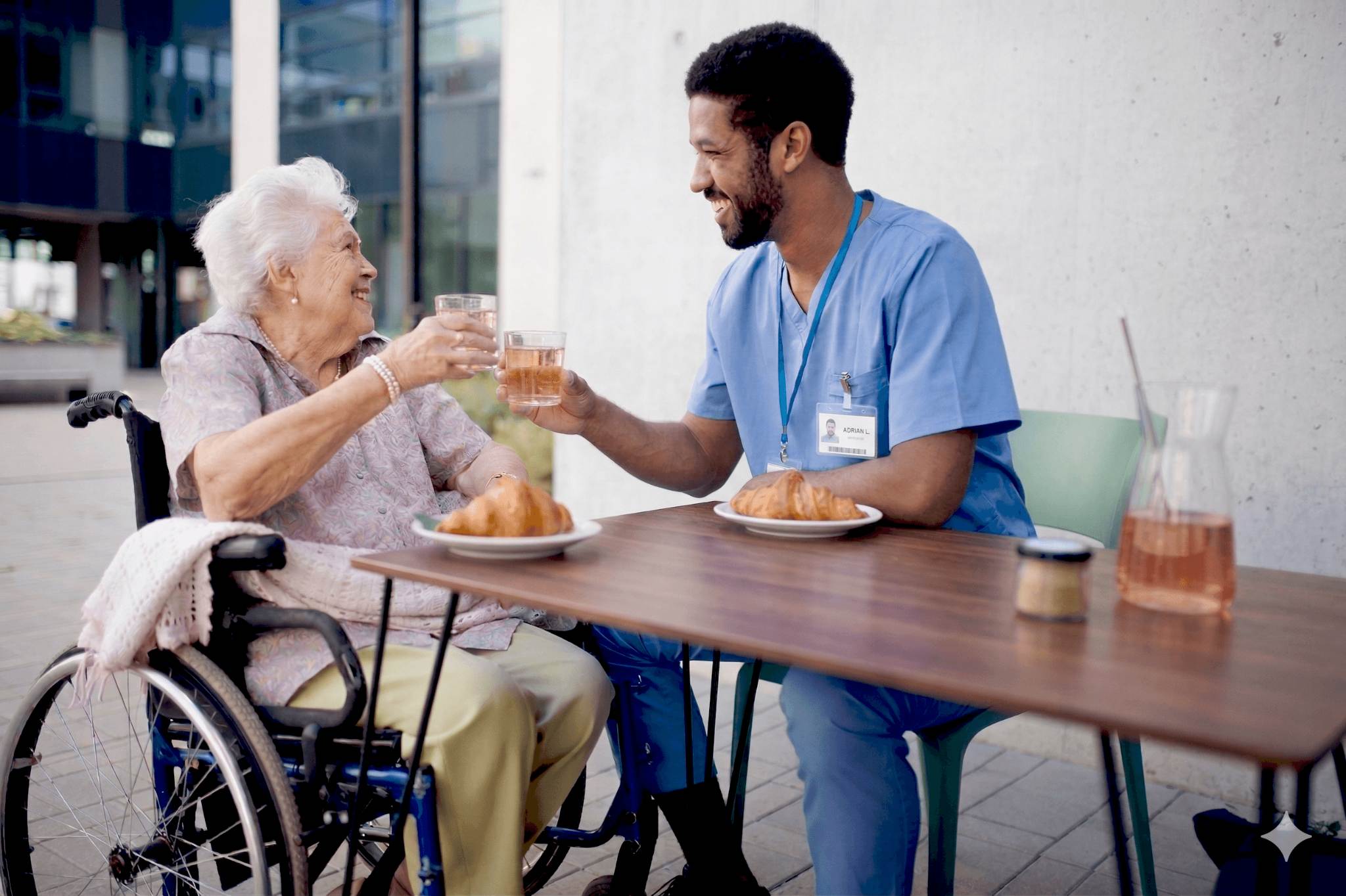
In theory, it's simple: 1.5 litres a day. In practice, however, in residential elder care, hydration is one of the biggest daily challenges. The German Nutrition Society (DGE) gives this figure as a guideline to maintain physical and mental performance [1].
Causes of fluid deficiency: why drinking becomes a challenge in old age
Biological hurdles: when the feeling of thirst stops working
Normally, our body sounds the alarm as soon as we lose just 0.5% of our body weight in water. With age, however, this regulation via receptors in the brain becomes less reliable. The result: despite a real fluid deficit, older people simply do not feel a sufficient urge to drink [2]. While an infant is 70% water, this figure for older adults often falls to just 40–50%. A small loss of fluid has fatal consequences here: confusion, falls and acute health crises. That is why a proactive drinking culture is so crucial.
The consequences of shrinking water reserves
Lower reserves: This is mainly due to declining muscle mass – our largest internal water store.
Less buffering capacity: With a lower water content, the body copes significantly worse with fluctuations (e.g. during infections).
Greater need for the kidneys: Because the kidneys are less able to produce concentrated urine in old age, paradoxically they need more water to flush out waste products such as uric acid safely.
Cognitive hurdles in fluid provision for dementia: overcoming visual stimuli and cognitive barriers
This is where the phenomenon of agnosia often appears – the inability to correctly interpret visual stimuli. A clear glass of water on a bright table has no contrast for the impaired eye. For people with dementia, the water simply does not "exist" there. In addition, the ability is lost to interpret thirst as a signal and translate it into the action of "drinking" [3].
Logistical hurdles: Overworked staff who hardly find time between documentation and care to accompany individual drinking routines.
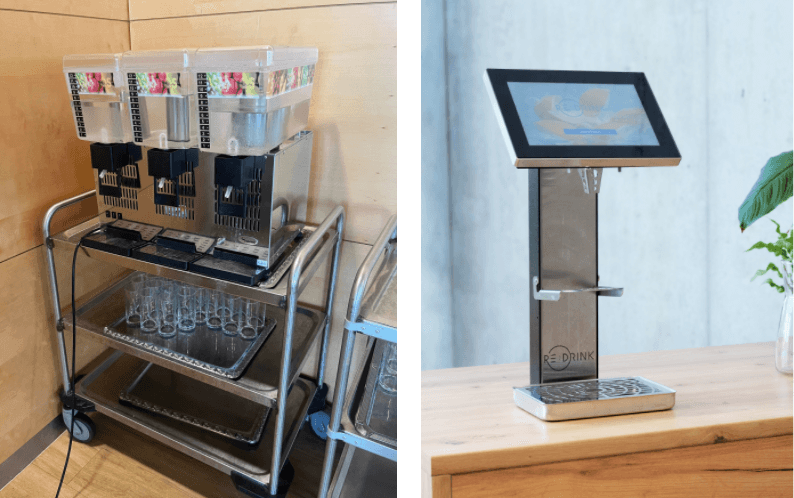
The shortage of skilled workers means that hydration is often reduced to just "putting out a glass". If beverages first have to be mixed laboriously in a remote tea kitchen or heavy crates carried around, there is no time left for the social aspect of drinking. A decentralised, easily accessible beverage supply is therefore essential in order to minimise staff travel times [4].
Recognising fluid deficiency: the warning signs
What should you do if older adults drink little? First you need to know the signs of impending dehydration. Look out for these warning signs:
Dry mucous membranes: Chapped lips or a coated tongue.
Dark urine: A clear sign of excessive concentration.
Sudden confusion: Fluid deficiency often leads to dizziness, increased drowsiness or mental absence.
Physical complaints: Constipation or an increased risk of falling due to circulatory problems [5].
Measures to prevent dehydration: 5 tips for an activating drinking culture
The question "How do I encourage older people to drink?" cannot be answered with pressure, but with smart psychology.
Visibility and colour: the eye drinks too
Beverages should always be placed visibly and within easy reach. A key hack: offer colourful beverages or coloured glasses. Signal colours such as red or orange catch the eye and trigger an unconscious drinking impulse (nudging) [6].
Taste variation: refreshment for the taste buds
Plain water is simply too boring for many older adults; the taste buds long for variety, as taste perception declines with age. That is where we come in: a diverse range of beverages with natural essences offers variety without burdening blood sugar levels with unnecessary sugar. Whether lemon, apple or elderflower – taste is a powerful motivator.
Legal matters & everyday care: Is a drinking log mandatory in a care home?
In proper care planning, dehydration prevention is firmly established. According to the expert standard of the DNQP, monitoring fluid intake in at-risk groups is mandatory [7]. A drinking log should be kept if residents fall below the recommended amount of 1.3 to 1.5 litres in order to counteract this objectively and ensure the quality of care.
Conclusion: Efficient beverage provision as a standard for modern care facilities
Drinking in old age does not have to be a mammoth task. With visible incentives, varied tastes and smart solutions, you not only relieve your staff of constant "mixing", but also directly increase the vitality of your residents.
This is where we come in with Re:Drink. We understand that "encouraging drinking" in a care home must not be an extra task for carers, but has to be supported by the environment (infrastructure). Facilities such as MÜNCHENSTIFT and the Rudolf and Maria Gunst House are already setting the example. Would you like to find out how our customers in care are already using Re:Drink? Go to the Case Study here.
References
[1] DGE (2025): Reference values for nutrient intake: Water.
[2] Journal of Gerontology: Age-related changes in thirst and arginine vasopressin response to increased plasma osmolality.
[3] ZQP (Centre for Quality in Care): Guide to eating and drinking with dementia.
[4] Care Prevention Act (2024): Guidelines for ergonomic workplace design in residential care.
[5] Robert Koch Institute (RKI): Dehydration in older age – symptoms and prevention.
[6] Thaler & Sunstein (2021): Nudge: The Final Edition. (Concept of choice architecture in healthcare facilities).
[7] DNQP (German Network for Quality Development in Nursing): Expert standard “Nutritional management to ensure oral nutrition in care”.


CONTACT
Let’s rethink your drink!
Get a non-binding consultation and find out how ReDrink can make your everyday life easier.
We would appreciate information about team size and industry so that we can prepare accordingly.